Notice

- Whether you react or respond
- What you desire in daily life
- What you believe
- What you neglect
The Yogic Blueprint
Discover how seeing the patterns of thought and emotion clearly can open the possibility for a profound change in consciousness.
We spend years learning how to function in the external world, yet we spend very little of our time learning how to understand the world within us.
We learn how to speak, work, and solve practical problems with our analytical mind. But what happens when anxiety takes over? Do I escape it with pleasure, try to think my way out of it, or perhaps numb it with pills?
Why do we repeat habits we know are harmful? Why does self-doubt return even when there is no rational reason for it? And why can a human being seemingly understand the external world while remaining almost completely unaware of the forces shaping their own thoughts, emotions, and behavior?
Yoga begins with this inward investigation.
The essence of all yogic practices is to become more aware of yourself — to turn inward. Some yogic traditions developed sophisticated methods for exploring consciousness through the mind, while others place greater emphasis on the body, breath, movement, and physical discipline.
Both are valid paths inward. But for the modern sceptical mind, a path based on observation, intelligence, and direct inquiry may feel especially natural. This is why we focus on the branch of yoga that works directly with the mind.
What is Mind-Yoga?
Mind-Yoga is a direct path toward inner realization, discovered by ancient yogis who were seeking enlightenment. It is a practice that uses awareness, intelligence, and psychology to investigate the nature of mind, consciousness, and existence.
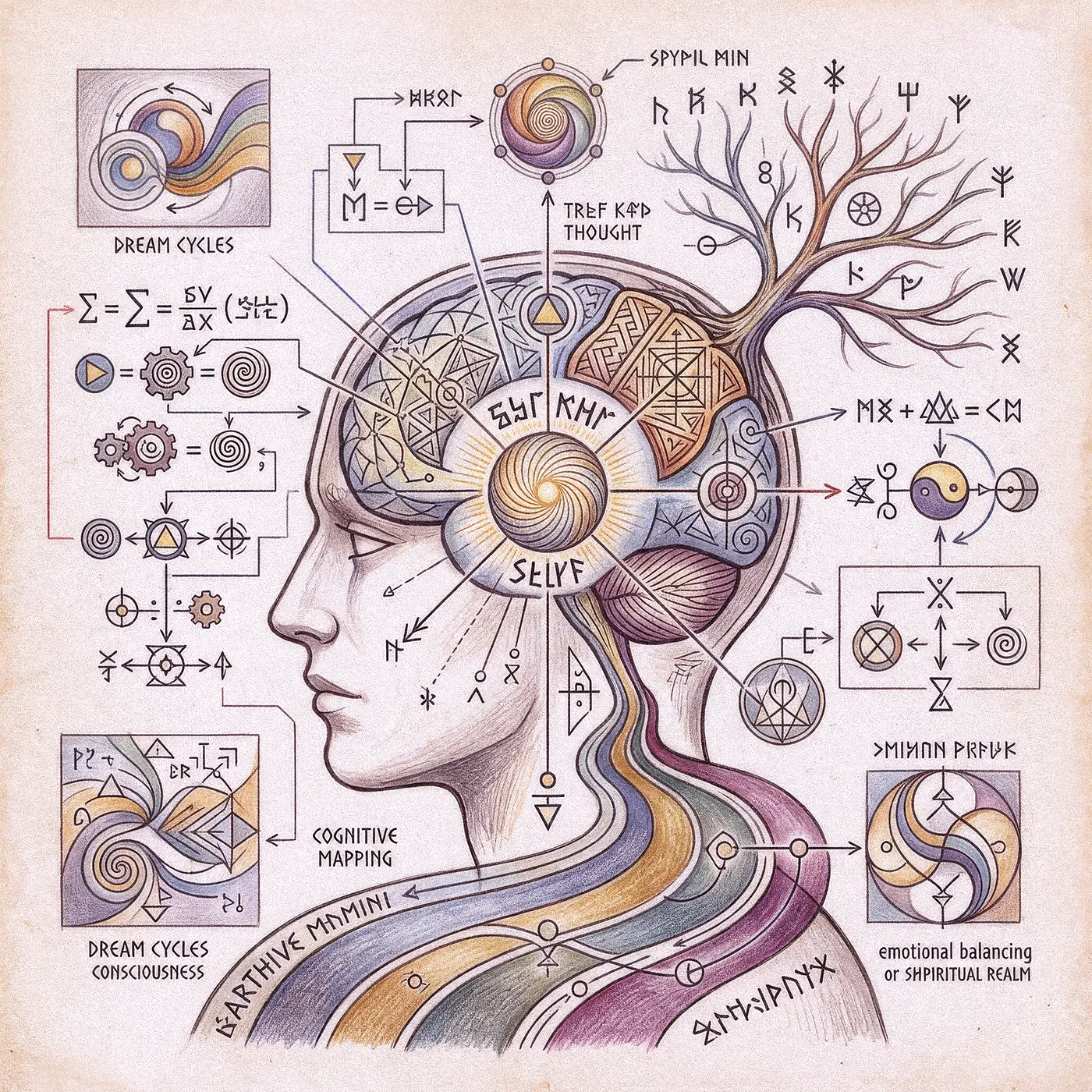
In Mind-Yoga, this means studying the deeper patterns of the psyche and witnessing directly how thought, emotion, memory, and conditioning shape your perception of life.
The reason this matters is simple. What happens within the mind influences almost everything else. How you react. What you fear. What you avoid. What you believe about yourself. Even the possibilities you allow yourself to pursue.
Consider, for a moment, how many psychological wounds a human being carries within. They accumulate throughout your life, beginning in childhood and continuing into adulthood. This happens because we are not taught how to resolve emotional trauma.
For example, a child may feel rejected, humiliated, frightened, or unwanted without having the capacity to fully understand what happened. The experience passes, life moves on, yet something of it remains within the body-mind.
Over time, many of these experiences disappear from immediate awareness. The conscious mind is busy with everyday tasks, while patterns of fear, avoidance, insecurity, anger, and unresolved desire continue operating underneath.
As a result of this forgetfulness, we develop tendencies without fully understanding what drives them. Doomscrolling, overeating, compulsive entertainment, procrastination, endless stimulation, or simply avoiding silence. We often do these things because something within us remains unseen. There is a part of the mind that would rather stay distracted than look beyond its immediate perception.
Most people do not consider this a problem because such behavior has become completely normal. But if I cannot sit quietly with myself and enjoy my own presence, I am in trouble. The moment being alone with myself becomes uncomfortable, I begin looking for an escape.
I reach for the phone, entertainment, food, work, conversation, or anything else that can pull attention away from what is happening within.
When the mind avoids being alone with itself, then it must constantly escape. Whatever I do becomes a race to avoid my own presence.
The mind comes up with excuses. It says silence is boring. It says there is something more important to do. But often, this is only a clever way of neglecting what remains unresolved.
Modern life rarely teaches us to recognize this. Yogic practice approaches it differently. A person experienced in meditation can gradually learn to sit quietly, close the eyes, and remain deeply at ease without needing constant stimulation.
Yogis who are experienced in meditation can sit still and be perfectly content.
Nothing to get.
Nothing to avoid.
Just enjoying their own presence.
Therefore, what appears to be an ordinary habit is often a way of avoiding deeper discomfort. For many people, daily distractions are a mechanism for keeping attention away from what is moving beneath the surface.
And this is where Mind-Yoga differs from regular self-help advice. It is not trying to forcefully change you. It is trying to make you understand yourself. Thus, yoga does not begin by condemning these habits. It begins with direct observation.
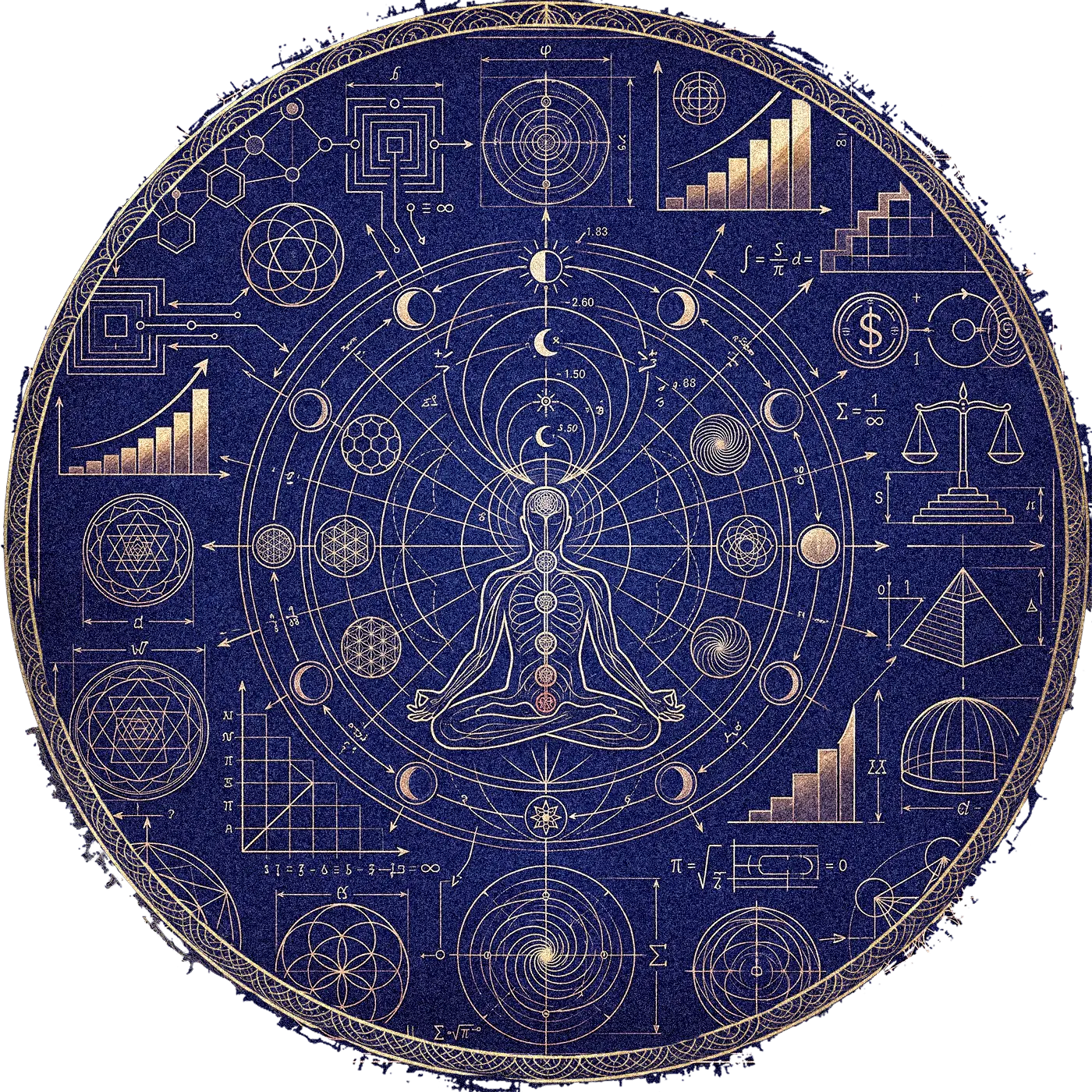
Yoga is not asking you to give up your favorite dopamine boosts. Instead, it asks you to look underneath them.
What is actually happening within you when you reach for another distraction? What are you trying not to feel? What movement of thought, emotion, or memory is taking place before the habit begins? This kind of observation gradually turns an unconscious reaction into something that can be understood.
Meanwhile, the inner experience becomes increasingly chaotic. The more we push unresolved problems out of awareness, the more they begin to influence us from the shadows. Thoughts appear before you choose them. Emotions change the way you see the world. Old patterns repeat themselves automatically. In this state, the mind moves faster than your conscious ability to understand what is happening.
The mind is an extraordinarily powerful tool, yet it is a tool we rarely learn to use consciously. When its movements remain unseen, the same intelligence that can create, understand, love, and transform can become trapped within its own patterns.
This is why the central aspect of Mind-Yoga is to learn how to observe the movement of the mind before automatically becoming lost within it.
For example, in anxiety, the mind projects itself into the future, imagines what may go wrong, and the body begins to respond as if the danger were already here. The imagined event has not happened, yet the body reacts to the thought of it.
In this state, the mind does not meet reality directly. It lives inside its own projection of fear and worry.
Imagine you are driving to work and suddenly the mind begins spinning with images of your boss yelling at you for being late. The body becomes tense. The breath becomes shallow. You rehearse an argument that has not happened.
Then you arrive and discover… your “boss” is also late.
In this way, the mind can go on thinking and imagining unnecessarily because it does not know how to settle. When negative thoughts are repeated unconsciously, they gradually begin to feel like truth. But look beneath the thought and observe the movement clearly.
This is Mind-Yoga in practice.
Instead of asking whether every thought is true and important, you first learn to see thought as thought. You observe imagination creating an event, the body responding to it, and the mind becoming caught in a reality of its own creation.

Much of our psychological suffering is created simply out of automatic imagination.
Another common problem in our world is low self-confidence. In this case, the mind measures itself against others, creates an image of lack, and then begins to live as though that image were true. Without realizing it, the mind hurts itself through its own conclusions. Once again, this is an automatic process.
But why do we not recognize it?
Often, these doubtful movements of the mind were learned much earlier in life. They come from childhood experiences, comparison, criticism, rejection, or repeated conditioning about who you are supposed to be. They feel like part of you simply because they have been repeated for so long.
Thus,
what is automatic begins to feel natural.
A thought appears. Identity attaches itself to the thought. Soon the mind begins living from a conclusion it never consciously examined. It does not know that another way of seeing is possible.
Mind-Yoga invites you to question this identification.
Is the thought “I am not good enough” actually you? Or is it a movement of the mind that has been repeated so many times that you stopped questioning it?
This is where self-knowledge becomes essential. Without it, we remain vulnerable to programmed behavior. The same reactions repeat, old fears return, and habitual patterns keep pulling us in familiar directions.
Some people move through life with greater confidence because their conditioning supports action, experimentation, and trust in themselves. Their environment has encouraged qualities that later appear natural to them. Others struggle unnecessarily because the mind has learned to doubt, hesitate, and expect failure.
And strangely, the mind can do all of this while believing that it is acting intelligently. But if the mind automatically holds itself back through learned behavior, is that really intelligence? Or is it simply following the road it was placed upon?

A conditioned mind may appear smart, but ignorance often masquerades as identity.
This is why self-knowledge is not philosophical or theological. What you understand about your own mind directly affects the way you live. The difference is profound. Once the mind can be observed, it is no longer identical with the observer.
Therefore, you can remain unconscious of this programming and continue living within the familiar boundaries of your comfort zone. Or you can choose another path and begin to see your mind and life more clearly.
What is seen can be questioned. What is understood can no longer control you from the shadows.
To conclude, if you feel a strong desire to take charge of your life. Or you wish to understand anxiety, move beyond self-doubt, and live with greater confidence, clarity, and joy. Then, Mind-Yoga is for you.
It begins simply.
First, you notice the problem. You observe the movement clearly. Instead of immediately identifying with every thought and emotion, you begin to understand how the inner mechanism works.
From there, meditation deepens this investigation by creating space to observe the mind without immediately reacting to everything that appears within it. Slowly, what was unconscious becomes visible.
As awareness deepens, thought, emotion, and intelligence can begin to move in harmony rather than conflict. This takes time, sincerity, and discipline, but such a transformation is possible.
The Yogic Blueprint was created to help you understand and transform your mind, so that you can transform the way you live.
The Yogic Blueprint introduces Mind-Yoga through a foundational 7-day course. Together, we explore consciousness, the nature of the mind, emotional patterns, conditioning, energy, knowledge, and meditation.
Step by step, the course invites you to look inward, understand the forces shaping your experience, and bring greater awareness into everyday life.